
Plan Change 120 - housing intensification
As a result of Government Legislation in 2022 (jointly agreed between National and Labour), Auckland Council was forced to upzone most of the city to enable more intensification (known as Plan Change 78 or PC78). After years of advocacy to allow Auckland more control over areas with natural hazards, the Government passed new legislation in late 2025 to enable this while still requiring council to zone for 2M new dwellings. Auckland Council publicly notified Plan Change 120 (PC120) on 3 November 2025 (replacing PC78) and received over 10k submissions.
In February 2026 the Minister announced that he was working with the Mayor to reduce the minimum housing capacity requirements to 1.6M dwellings and in March/April new legislation changed the target to 1.4M dwellings.
Since then, the Governing Body (Mayor and Councillors) have been meeting to work through the potential options for how to respond to this new target. These workshops are considered open, which means the materials and a recording is published after the session – most of this information has been sourced from a workshop held on 27 May, which includes a presentation and recording: https://aucklandcouncil.resolve.red/portal/Meeting/13831/93967?type=2&docId=45749
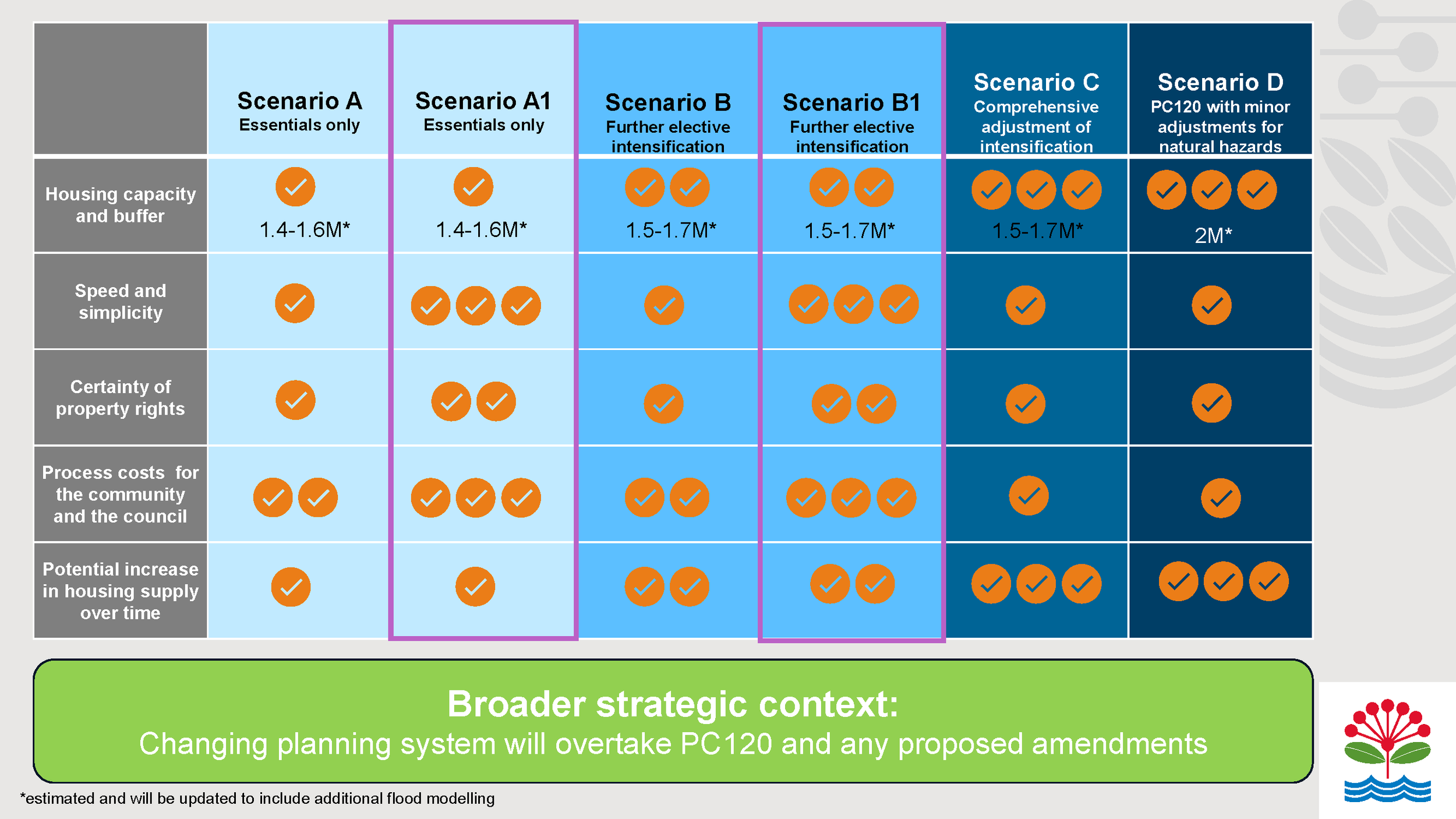
As of late April there were 6 scenarios being considered, which have been narrowed down to four refined scenarios:
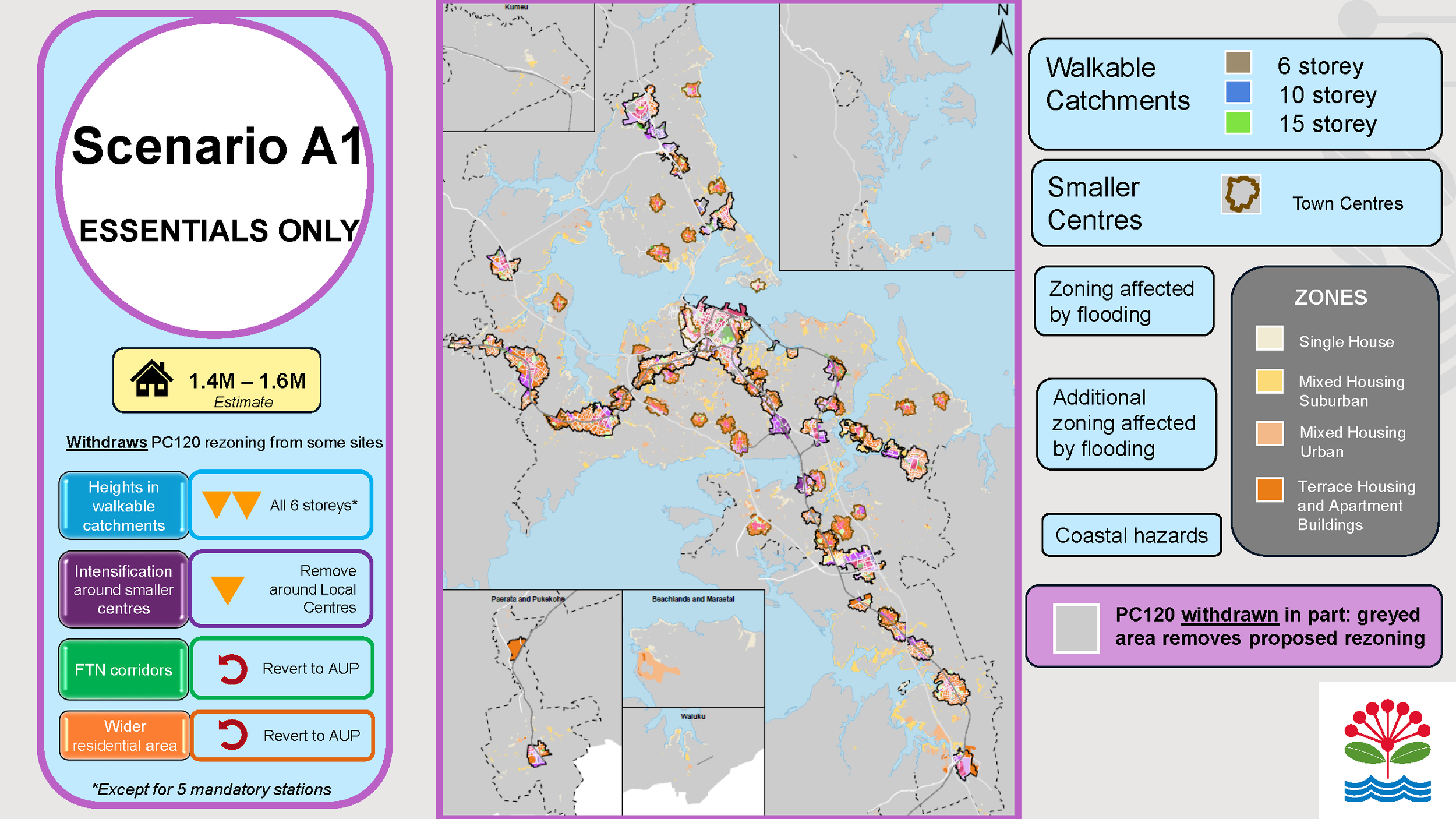
A Essentials Only: 1.4-1.6M dwellings by reducing heights in walkable catchments to 6 storeys (except around 5 mandated CRL stations), removing local centres, and returning transit networks and wider residential areas back to AUP. Provides roughly 12k new dwellings per year, 24% of these within 10km of city centre. Compared to AUP, estimated to reduce house prices by 1-2% and provide $0.7B in benefits.
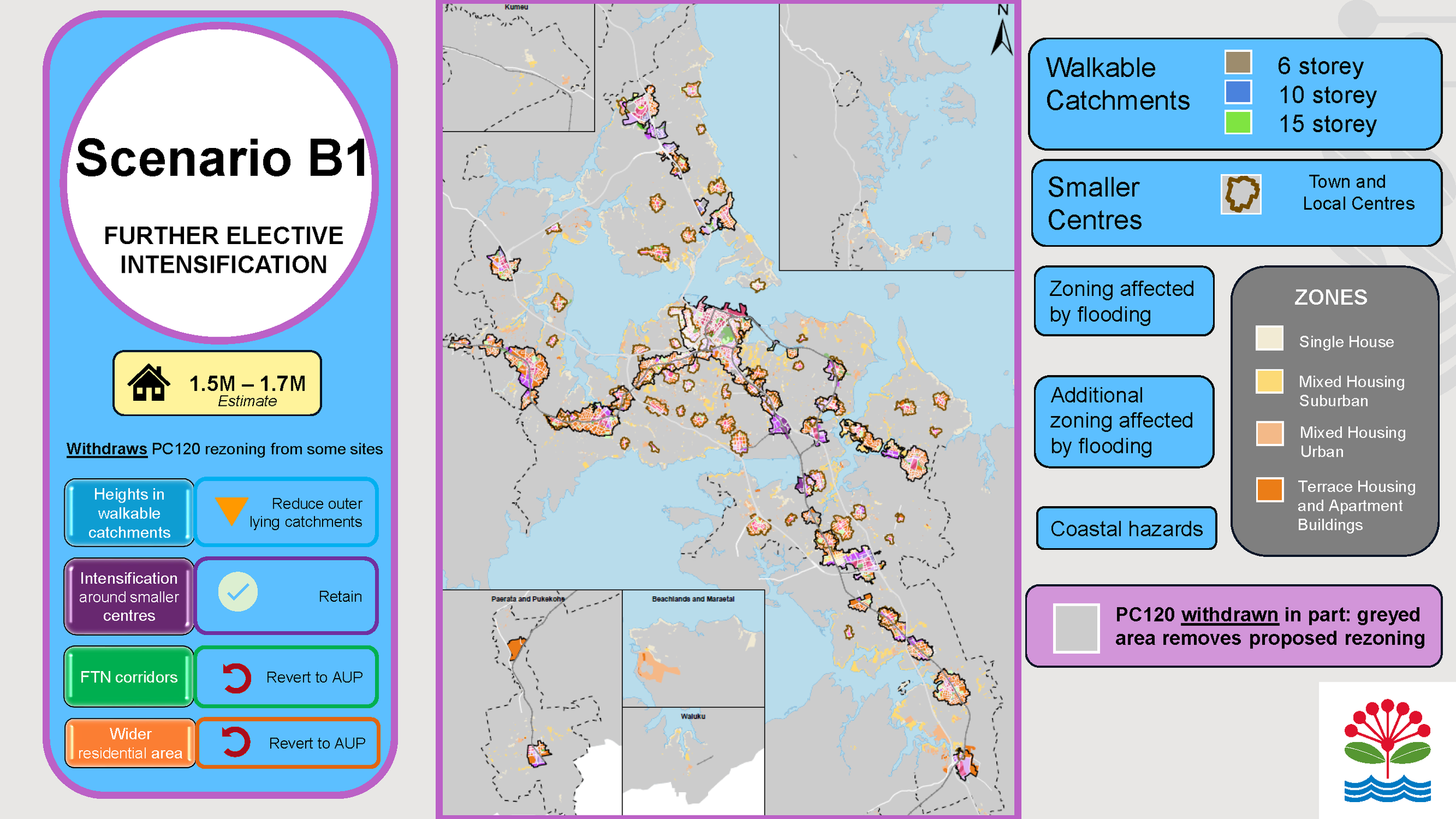
B Further Elective Intensification: 1.5-1.7M dwellings by reducing outer lying catchments to 6 storeys, retaining local centres, and returning transit networks and wider residential areas back to AUP. Provides roughly 14k new dwellings per year, 28% of these within 10km of city centre. Compared to AUP, estimated to reduce house prices by 2-4% and provide $1.7B in benefits.
C Comprehensive adjustment of intensification: 1.5-1.7M dwellings by retaining heights in walkable catchments, intensification around local centres, but removing outlying transit corridors (rezoned to MHU not THAB), and rezoning wider residential areas based on access. Provides roughly 16k new dwellings per year, 30% of these within 10km of city centre. Compared to AUP, estimated to reduce house prices by 4-7% and provide $3.3B in benefits.
D PC120 with minor reductions for natural hazards: 2M dwellings – retain as per PC120. Provides roughly 17k new dwellings per year, 29% of these within 10km of city centre. Compared to AUP, estimated to reduce house prices by 5-8% and provide $3.9B in benefits.
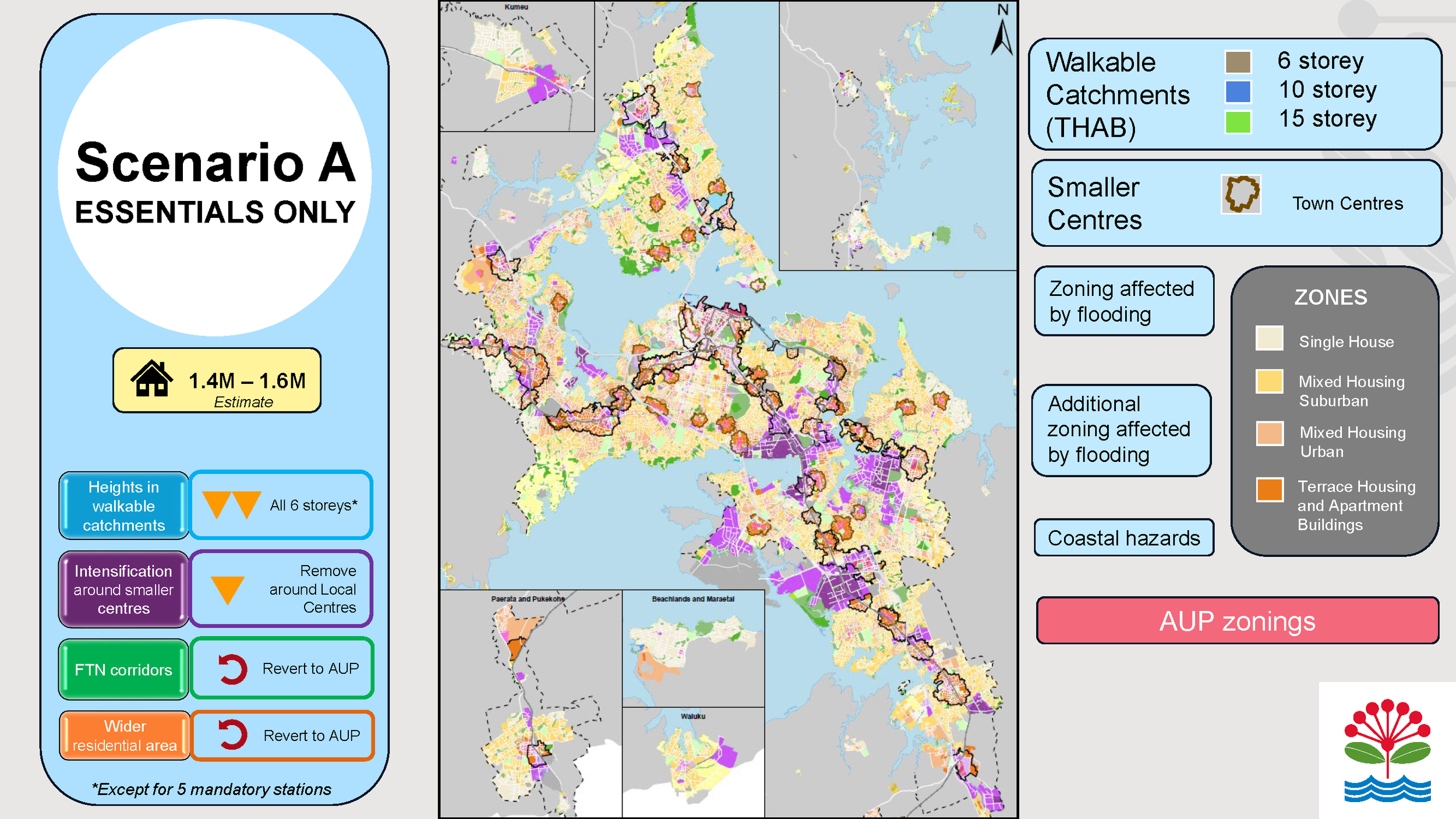
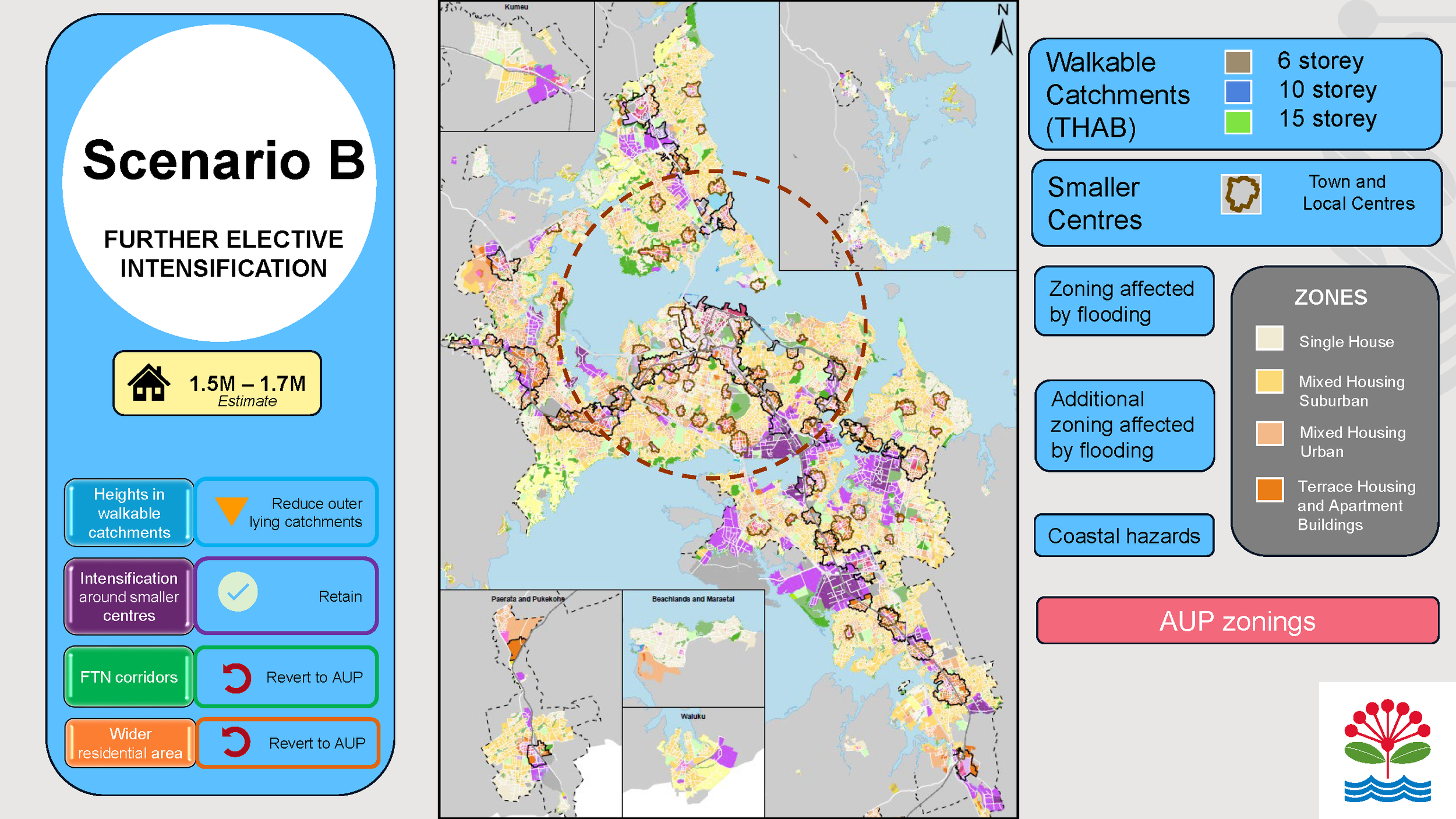
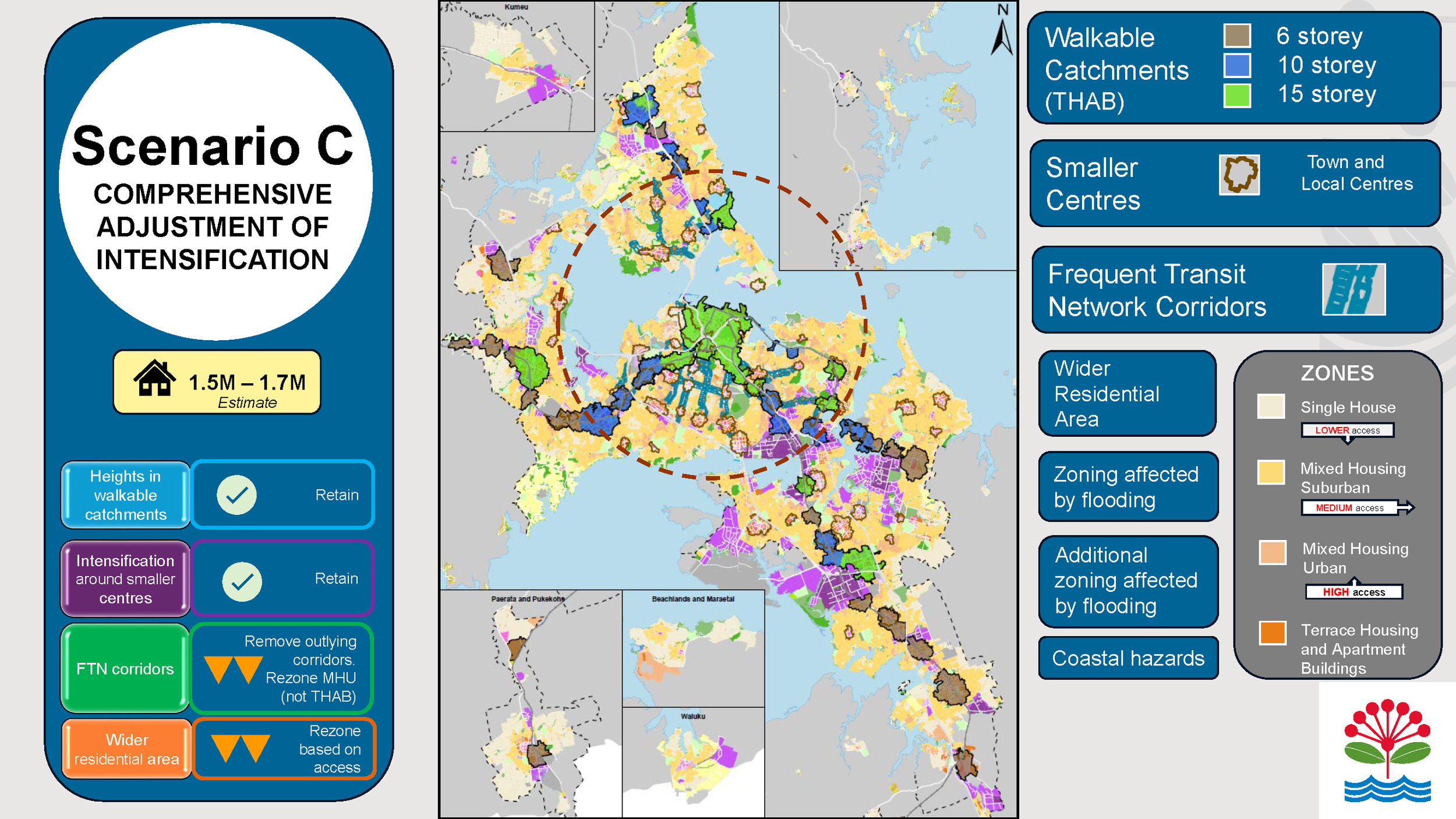
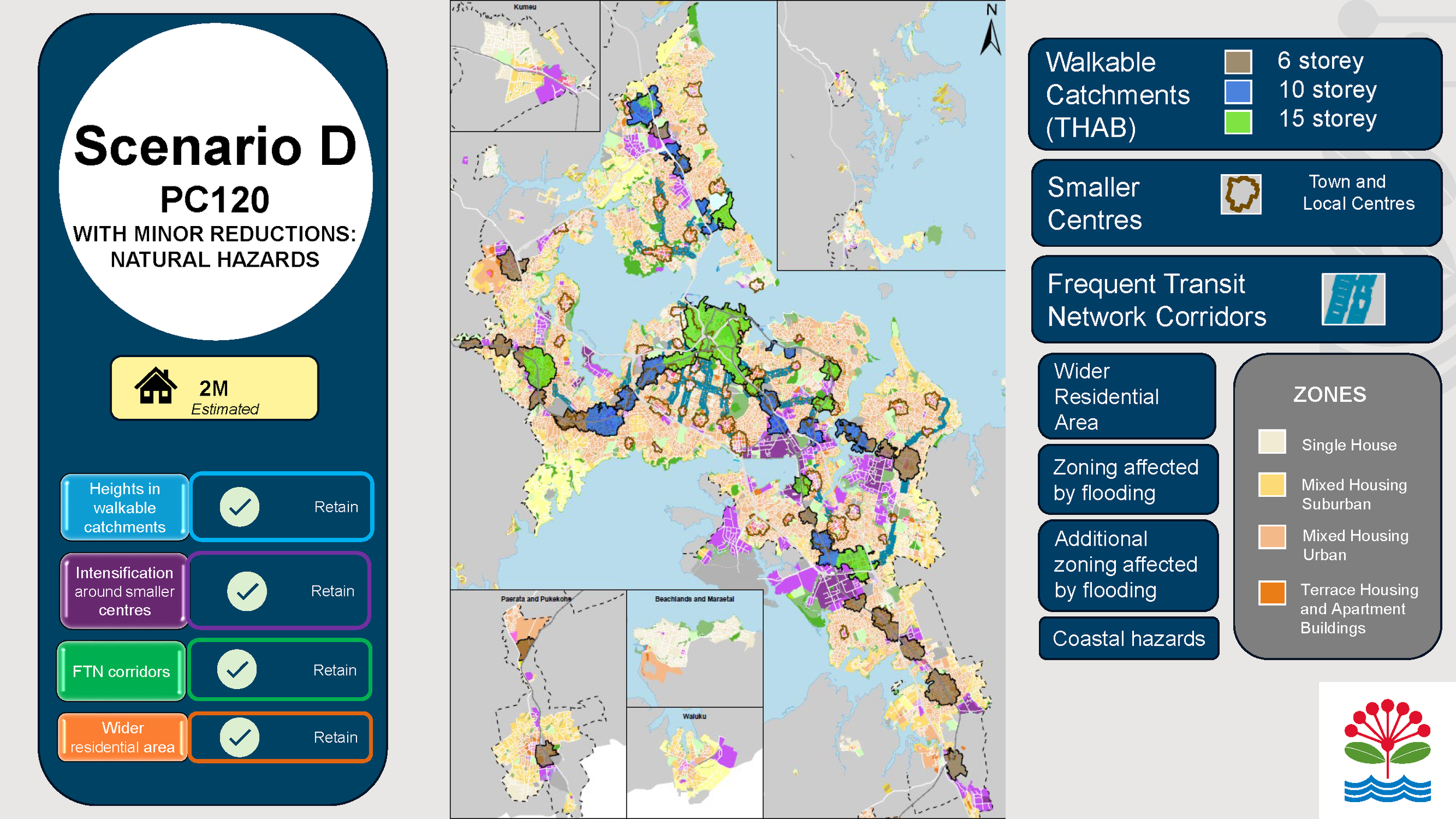
Auckland Council also has the opportunity for a partial withdrawal – effectively dropping rezoning of parts of the city outside of the areas needed to meet the new 1.4M dwelling target. This would refocus the Plan Change on the upzoning areas, which may help avoid issues with the new planning act - the Resource Management Act that enabled PC120 has been replaced and requires a completely new Regional Spatial Plan (expected mid-2027). According to staff this could reduce costs and save time for council and the public but could reduce flexibility for changes from the Independent Hearing Panel. These are being considered as additional scenarios A1 and B1, achieving similar outcomes but potentially faster and cheaper.
According to the materials, a decision on the preferred potential scenario is expected to occur on Tuesday 9 June (presumably at the Policy, Planning and Development Committee). After this point local boards and iwi will be invited to provide feedback before a decision to proceed (or not) occurs in July.