Labour and National team up on housing - but will it be effective?
Yesterday saw a massive announcement on housing - a rare show of bipartisan support with Labour and National announcing an end to single house zones in the largest cities in New Zealand.
Yesterday saw a massive announcement on housing - a rare show of bipartisan support with Labour and National announcing an end to single house zones in the largest cities in New Zealand. Minister of Housing Megan Woods and Minister for the Environment David Parker held a joint press conference in the beehive theatrette with Leader of the Opposition Judith Collins and Opposition Housing Spokesperson Nicola Willis. Beehive
Approximate of new zone allowing 3 stories (Source)
Effectively it forces councils to allow up to 3 homes of up to 3 storeys on most sites in Auckland, Hamilton, Tauranga, Wellington, and Christchurch without the need for a resource consent. There are other changes to the minimum rules with increased building height to 11m and height in relation to the boundary now 6m + 60 degrees. I’ve seen estimates that this will affect 92% of Auckland’s residential area which is massive.
After years of politicians blaming each other for the housing crisis, it was refreshing to see them actually do something about it. Cross party support is more than just good PR, it creates certainty. Our construction industry has been calling for greater clarity on long term demand which this should help provide.
Unfortunately this seems to be as inclusive as it’s going to get, with other political parties (including Labour’s political ally the Greens) not involved. And most critically the councils weren’t consulted, despite asking to be involved. It’s a stark reminder of the dysfunctional relationship between central and local government, the same misalignment that continues to play out in infuriating delays to projects like the Eastern Busway. Given this, it wasn’t surprising to see councils respond negatively to the announcement.
“If they want to make a big dent in Auckland [housing supply], then the problems are skills shortages, supply chain problems, material costs due to a duopoly of suppliers, and the funding of infrastructure to support big developments,”
- Chris Darby, Auckland Councillor and Chair of the Auckland Council Planning Committee via Stuff
Some argue that councils have failed and the government is being forced to step in. There is definitely some truth to this - councils have been extremely slow to respond to growing populations and progress has often been held hostage by a noisy, privileged few. However these criticisms (and a lot more) can also be made of government. And it’s also worth remembering that the structure, funding and very existence of councils is controlled by the government - while we all wish that Auckland Council would get those pesky CCO’s under control, there are limits that were put in place by an Act of Parliament. Critically, government needs councils to buy into this change, not fight it.
How could councils cause trouble? While the proposal will force councils to intensify in most residential areas, there is an exception for heritage protection. Minister Phil Twyford (former Minister for Housing and Urban Development) said on Twitter last night that “Character overlays precluded. Councils can protect individual buildings or clusters, as with NPS-UD, but that requires site analysis & justification.” (Twitter)
When I asked who would be making those decisions, I was told “Protection is Council's.” . It’s good to see that there will still be some local input and it will be interesting to see how heritage is interpreted and implemented. I’m a passionate supporter of respecting our history but it’s open to abuse as we've seen. Tywford agreed about the risks of misuse and noted “its something we're working on for the new planning system.” This will be a critical detail and may make or break this policy. In particular I’m interested to see how these changes will impact other rules such as the limited view protection that we have on Stockade Hill, secured after a long, bitter and expensive battle in the media and courts. On the other end of the spectrum is Wellington, who’s extremely broad interpretation of character has led to some feisty exchanges.
Judith Collins had some pretty direct words on heritage protection:
"To those... I say this: Our communities lose their character when people can't afford to own their own home.
"Stronger communities are formed when families can own their home and it is in the interests of all Kiwis to live in a property-owning community, where people put down anchors in their community and have a stake in local affairs; where kids get to stay at the same school; where the politics of envy aren't fuelled by rapidly rising house prices; where our children can afford to buy a home and start a family and growing up in a property-owning democracy."
The announcement also included bringing the National Policy Statement on Urban Development (NPS-UD) forward by a year, meaning councils need to notify plan changes by August 2022. It’ll be a busy year for councils as they adapt to these changes, untangling the current rules and applying the new ones. There is also some risk of throwing out what we've got, broken as it may be. The Auckland Unitary Plan (AUP) was made operative in 2019 and while it’s still undergoing changes, it’s largely done. It’s far from perfect (too much to cover here) but it has delivered more consents with nearly 20,000 being issued the last year, up from 3,600 in 2012.
The government estimates the changes will mean another 27,900-53,700 houses consented in Auckland over the next 5-8 years which isn’t a small number. But you can’t live in a consent - someone still has to fund, build and own these houses. There is some hope that the additional scale will bring efficiencies, but I wouldn’t be holding my breath for affordable housing. The significant increase we’ve seen under the AUP hasn’t had any measurable impact because supply is only one part of the equation.
Critically we need more funding and commitment to infrastructure, especially transport and water. Announcements like this are important but ultimately the budget is where we see the real priorities. The $3.8 b Housing Acceleration Fund is a good start but a tiny drop in a massive ocean. We also need to deal with our inequitable tax system and the massive wealth transfer that continues to undermine our economy and the future of our country.
In summary:
Great to see cross party policy.
Not engaging councils was a mistake.
Enables more intensification which should mean more housing.
Still need significant systematic change to address the root causes + wider issues.
Heritage protection will be the key battleground.
The right to self determination is one of the most fundamental human rights.
My submission on Inquiry into Supplementary Order Paper 59 on the Births, Deaths, Marriages and Relationships Registration Bill
Submission on Inquiry into Supplementary Order Paper 59 on the Births, Deaths, Marriages and Relationships Registration Bill
Kia ora koutou,
My name is Damian Light, I was born in Tāmaki Makaurau Auckland and have lived here my entire life. I work fulltime in business improvement and volunteer in my local community through a number of charitable organisations.
I support the proposal to make it easier for all New Zealanders to correct their records. The gender and sex marker should be self-identified and a painless process to update.
The current process is complicated, expensive and at times traumatic for those involved. Unnecessarily involving the Family Court or medical professionals does not enhance the process, it just makes it less accessible for those that need to use it. While the majority of New Zealanders will notice little change, making this process easier will make a huge difference for those that do need to utilise it.
It’s essential that the changes made by this SOP and Bill are focused on improving the process to streamline it as much as possible. Therefore there is no reason why correcting records on gender identity should require surgical procedures - surgery isn’t always suitable or desired and there is still a lack of access for many.
The Bill is written to exclude those born overseas which does not resolve issues with self-identification for permanent residents born overseas, migrants and refugees. The Bill should include a simple administrative process that every New Zealander can access, regardless of their place of birth.
It has been frustrating to see this small, but significant improvement take so long due to unwanted political interference and campaigns of misinformation based on bigotry and fear. I implore the committee to ensure that submissions are considered based on their relevance to this SOP and Bill.
Ngā mihi nui,
Damian
Harmful conversion practices should be banned
Parliament is accepting submissions on the proposed ban on conversion practices. There is no justification for the damage they cause and there is no place for them in New Zealand.
My submission on the Conversion Practices Prohibition Legislation Bill:
Kia ora koutou,
My name is Damian Light, I was born in Tamaki Makaurau Auckland and have lived here my entire life. I work fulltime in business improvement and volunteer in my local community through a number of charitable organisations.
I wholeheartedly support a ban on conversion practices. As a queer person, I am appalled that this has been allowed to continue. I was born a few years before the homosexual law reform of 1986 - while I was too young to remember the debate, I have lived the change that it brought. We recently celebrated the 35 year anniversary, yet many queer people in New Zealand continue to face discrimination and bigotry. Despite our progress, too many queer people, especially our youth, are harmed by hatred. The awful conversion practices that this law is intended to combat, are part of this harm and must end. There is no justification for the damage they cause and there is no place for them in New Zealand.
I was raised as a Catholic and, while I no longer practice, many of my whanau still do. We are fortunate to live in a country where people can follow the religion or belief system that works for them. The diversity of our country is one it’s great strengths and we need to acknowledge and celebrate it. Those religious freedoms should not be used as a weapon to hurt others - there is no excuse for the hatred that drives these awful conversion practices.
These practices continue to hurt people and must end now.
Howick Local Board meeting for July 2021
Monday night was the Howick Local Board meeting for July with discussions on bikes, dogs and bylaws. I always try to attend to see what’s happening in the community and at Council.
There were three members of the public speaking - local BMX Club Mountain Raiders are asking for an asphalt pump track (similar to what was built in Grey Lynn a few years ago).
There were two separate speakers on dog parks - one asking for an off-lead area in Mangemangeroa and another speaking against the proposed off-lead park in Macleans Park (public consultation closes 25 July)
Councillor Paul Young provided an update on the governing body (Councillor Sharon Stewart wasn't available) with a focus on the Eastern Busway. He said he and Sharon were both surprised by the delays and continued to work to bring the project forward (although I'm unsure how this would be possible now). Paul also noted that while Auckland Council broadly supported the need for reform of water infrastructure (especially funding), there was concern that the government's proposed solution would mean less accountability.
It was interesting to see that Auckland Transport had a monthly report again - these had stopped while they reviewed the reporting process, apparently they're resuming them while the review continues. Unfortunately the AT representative was sick and unable to present anyway which was a shame because I'm sure the local board would have wanted to ask about the delays to the Eastern Busway.
Auckland Council is proposing a new sign bylaw and the local board provided their feedback, generally supporting the document. They asked for greater enforcement of the rules. The Board also asked for consideration of a cap on the number of signs per candidate or party in each ward to help reduce the clutter and even the playing field. This wasn't supported by all members and only passed 6 to 3 with Members Spiller, Turinsky and Bungard voting against it. One of those opposed noted that they weren't sure that a limit was possible under freedom of expression laws and we'll have to wait and see how far this goes within council.
The Board also supplied input into Auckland Council's submission on the government's planned RMA reform. The Board asked to ensure that the public would still be consulted on consents in their area and there was concerns that the new legislation would make it more difficult for the public to have their say. There seems to be agreement from most political parties that there should be some reform although with a majority, Labour won't need consensus to pass their bills through Parliament. The draft legislation isn't due until early 2022 so we will have to wait and see what they propose.
Full agenda for the meeting is available online and the minutes are normally up within a week or two (although they only capture the resolutions, not the discussion).
35 years since homosexual law reform
9 July 2021 marks the 35 anniversary of the Homosexual Law Reform, which passed it’s final vote in parliament on 9 July 1986 and came into effect on 8 August the same year. It’s a time to remember those involved, celebrate the progress and strive for more.
Today (9 July 2021) marks the 35 anniversary of the Homosexual Law Reform, which passed it’s final vote in parliament on 9 July 1986 and came into effect on 8 August the same year. It’s a time to remember those involved, celebrate the progress and strive for more.
Every anniversary is a reminder that generations suffered under a draconian law that was repealed in my lifetime. Male homosexual sex became illegal in New Zealand when the country became part of the British Empire in 1840 and adopted English law making male homosexual acts punishable by death. Unbelievable harm was done during this time, not just to those who were punished, but those who lived in fear of the law and public opinion. Even today there are many who live with the scars of this time.
I am eternally grateful for those who fought to make this reform happen, too often at great personal sacrifice. The opposition to this reform was loud, bigoted and nasty. MP Norman Jones who led the opposition to the bill publicly said 'Go back into the sewers where you come from ... as far as I'm concerned you can stay in the gutter.' The AIDs crisis had been poorly managed and was used to scare people, with lies spread to support their bigotry.
I'm endlessly grateful for Dame Fran Wilde who introduced the bill and for every MP who voted for it. I'm not sure I'd be here if they hadn't. We often look back on history as facts that happened, but it took courage to stand up for the rights of others. The bill only passed by five votes and the second part of the bill (removing discrimination on the basis of sexuality) failed. It wasn’t until the Human Rights Act of 1993 that protection was added.
I’m reminded of how far we've come in the past 35 years. Society, legislation, workplaces and politics are changing. I’m delighted to see younger generations able to express themselves, to be themselves.
Progress Pride Flag by Daniel Quasar
But we still have a long way to go. Despite the progress, inequalities still exist especially in health. Stigma and discrimination lead to higher rates of mental health issues and even suicide. And then there are physical illnesses – STIs like syphilis and HIV disproportionately affect rainbow communities. This gap is even more true for our trans whānau who continue to face battles for even the most basic human rights. Bi erasure is still too common and those who are intersex need to be heard. I’m proud that the pride flag has evolved to show the wider spectrum of diverse people who live in our communities.
As we look back on the past, there are many who could learn from these brave souls who put aside personal gain to help others. The fight for equality is not over until we have achieved it for all, equality for some is not true equality.
Auckland Transport $37B plan nothing to celebrate
On Monday 28 June, the Board of Auckland Transport approved their ten year plan known as the Auckland Regional Land Transport Plan (RLTP). The plan comes with a hefty price tag of $37 Billion which on the face of it seems positive - Auckland has under invested in transport for far too long. However, there isn't much to celebrate.
It does not meet the needs of our current growth projections, so congestion will continue to get worse. Blocked roads already cost the city millions of dollars a day in lost productivity - we need action to provide realistic alternatives to unlock our city. Reliable, affordable and accessible public transport would take pressure off our roads and leave capacity for those who need their vehicles.
It does not move us towards the council's climate change target of reducing emissions by 64% by 2030. In fact it only claims to reduce emissions by a mere 1% and that relies on the government's controversial freebate scheme for electric vehicles. Analysis by people far smarter than me suggests that the plan will actually increase emissions in the short term. Auckland Council declared a climate emergency in 2019 and has done little since (in fact public transport fares have gone up twice since).
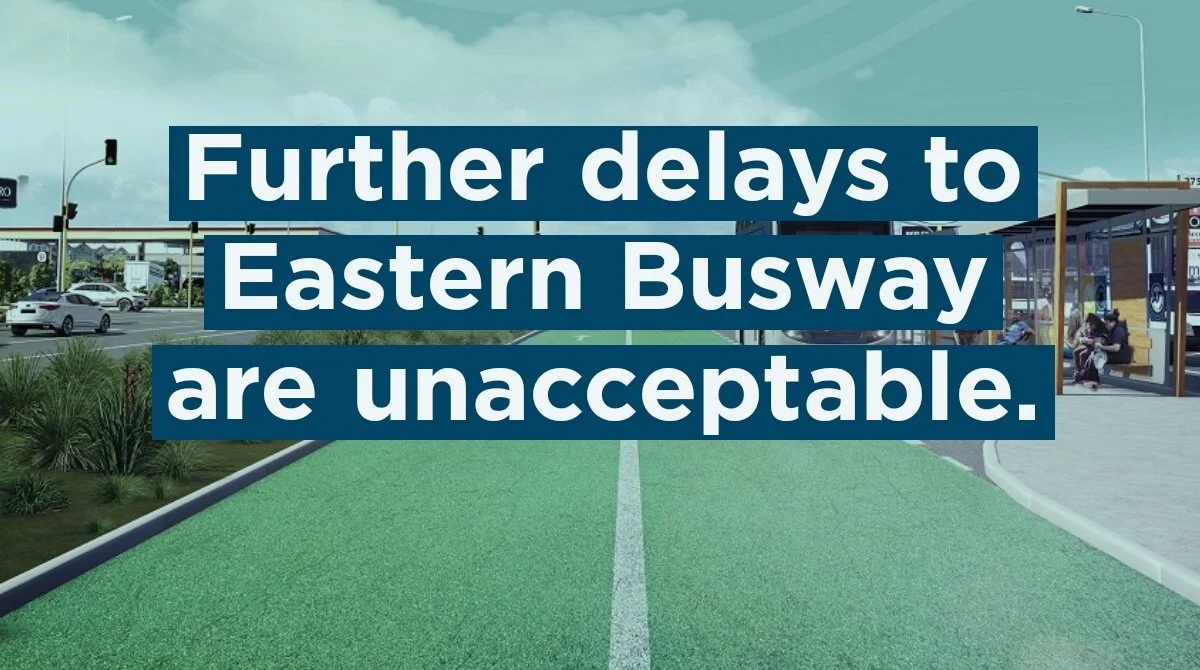
It does not deliver the infrastructure we need - key projects like the Eastern Busway are delayed. It’s taken far too long to get this project to this point and now it’s going to be another two years late bringing the final date to around 2026 (I won’t hold my breath). This is despite promises from the Mayor last year that delays like this wouldn’t happen.
Our elected representatives had their vote last Thursday, and to their credit, both Howick Ward Councillors Sharon Stewart and Paul Young voted against it. But the plan was still endorsed by the rest of council and Auckland Transport has signed it off.
According to AT, they were hamstrung by the funds provided by Auckland Council in their 10 year plan. It’s worth noting that the RLTP is funded through the Regional Fuel Tax, the extra that Aucklanders have to pay at the fuel pump in exchange for an accelerated transport plan. I’ve always believed that this was a clumsy funding model and it’s not delivering.
What’s even more unbelievable is that the council is still out of touch with our transport needs. This should not happen - this process has taken months and involved countless staff from across Auckland Council and it’s various organisations. We all know that the council has funding challenges but to arrive at this point to discover that key projects and outcomes cannot be met is appalling. There aren't side projects that got lost in the detail, they’re core to the city's transport plan.
Auckland Council and Auckland Transport have agreed to develop a Transport Emissions Reductions Plan, but we've all heard the promises before. We’re already a year and a half through the decade and Auckland Transport is never on time. Even if they do agree to a plan this year, I have little faith they’ll be able to deliver it by 2030.
Further delays to Eastern Busway are unacceptable
Yesterday Auckland Transport admitted that the Eastern Busway has been delayed yet again.
They've blamed a council funding squeeze but the reality is that AT is incapable of delivering on their promises.
Yesterday Auckland Transport admitted that the Eastern Busway has been delayed yet again.
They've blamed a council funding squeeze but the reality is that AT is incapable of delivering on their promises.
We have been promised this for decades and it was finally happening. When it was under threat last year we were assured this would never happen. But frustrating here we are again, another slow down.
We've endured years of disruption from construction, paid more in fuel taxes and put up with dreadful congestion with promise that solution was coming. We now have to wait longer again.
While we've been waiting AT have reduced the plans, cut walking/cycling connections and delayed the delivery.
Meanwhile they've wasted millions on vanity projects like AT Local and the Wynyard Tram which have taken us backwards.
Disgraceful.
I'm furious - for over a decade we've been told that the CCOs aren't accountable to our elected representatives but nothing has been done.
It's clearly not working, it has to change.
Did this pole really need to go here?
For years I've been battling with Auckland Transport to try address the lack of pedestrian crossings on the Mt Wellington Highway near Sylvia Park. Not just a major shopping destination, it's also a transport hub for the area but there's gaps in the footpaths.
I recently noticed roadworks underway on one of the on ramps and what appeared to be a new pedestrian crossing. My excitement was quickly dampened when I discovered this pole had been placed right in the centre of the new footpath.
It's clearly a hazard, especially for people with wheelchairs, prams or mobility scooters. Not sure who's fault it is but clearly it doesn't belong here.
I've asked AT what is happening...
Where's my bus?
I'm meant to at a sustainable business event, talking with other local young professionals about what we can do to tackle climate change. Huge challenge we have to face.
But instead I'm standing at a bus stop waiting for a bus that may never come.
I'm meant to at a sustainable business event, talking with other local young professionals about what we can do to tackle climate change. Huge challenge we have to face.
But instead I'm standing at a bus stop waiting for a bus that may never come.
I use public transport as my primary means of getting around Tāmaki Makaurau - bus, train and the odd ferry. There's lots to enjoy, but the reliability is an issue that we must address. Accessibility and affordability also big concerns.
Apparently I missed my connecting bus (or it never turned up) and the next one couldn't fit in the Ōtahuhu station so just drove past. Now I'm late because I tried to do the right thing and not drive.
So much for the Climate Emergency Auckland Council and Auckland Transport
Road safety needs to be taken seriously
It's Road Safety Week and Auckland Transport have shown their support. But what we need is action.
For all the promises of Vision Zero, there's too many issues being ignored. People are being hurt and killed, it's shameful. Last year 37 people were killed on Auckland roads and nearly 500 were seriously injured.
On paper Auckland has some great plans and strategies to make our city safer. But in reality, the focus shifts and the funds evaporate.
Not enough pedestrian crossings, too many missing legs.
Not enough protected cycleways, too much mixed traffic.
Not enough enforcement of rules, too many bad habits formed & endorsed by lack of action.
Not enough action, too much talk and promise.
In East Auckland we've seen primary school kids left to fend for themselves, forced to share roads with heavy construction vehicles and no footpaths while council debates who funds the solution. Thanks to the tireless work of their caring school and community, it's being addressed but it shouldn't take so much effort to keep people safe.
I don't blame the staff at Auckland Council or Auckland Transport - these issues are cultural and systemic. They're driven by poor governance, confused strategy and a lack of political will. Last year's Emergency Budget saw safety funding cut which our Councillors and Mayor knew would increase injuries and deaths but they voted for it anyway. If we were serious about safety (and we should be) then we'd prioritise it, not defund it.
In the meantime, travel safely and look out for others.
Community Patrols NZ conference
In mid-March I spent a weekend in Palmerston North at the Community Patrols New Zealand leadership conference representing Botany.
It was great to learn from the Commissioner about our partnership with NZ Police and make some great connections with volunteers across Aotearoa.
CPNZ is made up of 170 community patrols across the country who volunteer as the eyes and ears of the NZ Police to keep their community safe. We’re always looking for more volunteers!
Selling parks and reserves won't fix anything
Stunning Saturday afternoon for a community meeting in Aberfeldy Park in Highland Park. Sadly this park is on the list for potential sale under Auckland Council's so called "asset recycling" programme which will see over $224m in community assets sold.
While I'm not ideologically opposed to asset sales, selling our reserves and greenspaces is something else entirely. As our city continues to grow and housing is intensified, these spaces become more important. Once gone, we'll never get them back. It's short sighted and fails to address the issues of waste and misspending.
Disappointed that neither of our Councillors could be there to hear concerns and explain their part in the decision making. Both voted for the asset sale programme in the Emergency Budget, although they did vote against the sale of these specific parks in a later meeting.
Big thank you to local MPs Christopher Luxon and Simeon Brown for organising the meeting, making sure that locals are aware of the issue and are heard.
Formal consultation is due to start sometime in February and locals are coordinating to ensure everyone is able to respond with full and complete information.
Auckland Transport is increasing fares, yet again.
In what feels like deja vu, Auckland Transport is yet again increasing the fares for public transport. From 7 February about half of all passengers will pay an average 35 cents more for each trip. In 2016 they reworked the fare structure and every year since then fares have gone up. Last year they blamed petrol prices and this year it's COVID19. The reality is that Auckland already has one of the most expensive public transport fares in the world and making it more expensive is only making our transport issues worse.
Auckland Transport and Auckland Council are selling these changes as a win by focusing on the 10% discount for off peak fares. We do have spare capacity in our off peak services and encouraging people to use this is a great way to smooth peak demand. But practically most people commuting to work, school or university will not be able to delay their trips to take advantage of this. They've also introduced a daily fare cap which should be a great way to encourage multiple trips. I’m a big supporter of a daily cap but setting it at $20 a day means it won’t do much to offset the increased costs.
While this decision comes from Auckland Transport, it’s ultimately Auckland Council who are accountable as they set the priorities and budget for the CCO. Auckland Council says it’s aiming to halve greenhouse gas emissions by 2030 and with transport making up nearly 40% of Auckland’s carbon footprint, getting people into more efficient forms like public transport is a must. Our council declared a climate emergency in 2019 but has continued to increase the cost of fares, driving people back to private vehicles.
These increases are apparently going to save $4.3m but we're kidding ourselves if we think that this makes good financial sense - congestion alone costs our economy hundreds of millions of dollars a year. A study in 2017 suggested that the cost of congestion in Auckland was $1.3B a year or $3.5m a day in lost productivity. Improving the capacity, design and state of our roads will help address this but to get real change we need to get people onto mass transit.
Public transport won't work for everyone in every situation but it should cater for most people's daily commute. And the more people that use it, the less traffic on the road for those who can't. I use public transport to commute to and from work every day and, while it’s not perfect, it's generally reliable and stress free. We still get stuck in traffic, but I can listen to music or read and the short walk to and from the stops has been good for my physical and mental wellbeing.
Across Auckland we are investing in transport which is fantastic. Many of the biggest projects underway around the city are transport related - CRL, Eastern Busway, Airport to Botany. These projects are delivering the much needed capacity and reliability to the network that we need to cater for our fast growing population.
But all of this will be a massive waste of money if it's too expensive to use! And Auckland Transport knows this, admitting that 556k less trips a year will happen on public transport as a result of these increases. Trips that will end up in private vehicles which means more emissions, congestion and crashes. Our city is growing fast and we're decades behind in transport infrastructure and services, cutting corners now is just kicking the can down the road again, a very congested poorly maintained road.
If Auckland Council and Auckland Transport are serious about addressing climate emissions, reducing congestion and making our city safer they will reduce, not increase the prices for public transport.
Reflecting on 2020
As we head into 2021, I've been reflecting back on the previous year. 2020 was a lot and certainly not the year I’d planned for! It's tempting to write it off and pretend it didn't happen but amongst the chaos there were still good times.
Work was full on, challenging at times but ultimately rewarding. I’m proud to have worked for an essential service that put people first but still managed to provide services to the primary industries throughout a rough year. That we could transition to a new CEO so smoothly is a testament to how well we pulled together for our shared vision. Very busy year and I loved my break, to recharge and unwind but I'm already back to work tackling some big changes.
Professionally my focus has been on my governance experience and skills. Mid-year I joined the Institute of Directors and have since attended a number of training courses, meetings and social events meeting some amazing people and learning a great deal in a short time. I’m putting this to use as a director of two commercial subsidiaries and the three community groups I volunteer with.
On a personal level it’s been tough getting the work/life balance right, especially when the physical separations vanished. Got things back on track with the help of friends and family, some well established disciplines that are working well. None of it would’ve been possible without my amazing partner Josh, who is always there to motivate and support me. We survived both lockdowns stuck at home, our relationship feels stronger for it!
Last year saw some big changes for my family. One of the most significant was farewelling the Light family home. It was the house that my father and grandfather built before I was born, in the then-undesirable Devonport. Four decades and a few additions later, a lot of memories formed and shared in that house. We lost the building to a fire a few years ago (no one was hurt), so it was just an empty section but still hard to say goodbye to a place that has been part of our life for so long. New chapter for my parents and for us all as they move to a new home (not too far away).
In other new beginnings we welcomed another member to the family with our newest nephew, the delightful Hugo born to my brother and his fiancé in August. I managed to sneak in a visit between lockdowns for a quick cuddle. He's already an awesome little dude and I'm looking forward to getting to know him better as he grows up. There were some other significant birthdays which we managed to celebrate and recognise depending on restrictions at the time. Family video conferences were suitably chaotic and fun.
While the pandemic has changed a lot, life still moves on. And we sadly had some extended whanau pass away last year. Losing anyone is difficult, even more so with the restrictions in place. Much like ANZAC Day, we learned to commemorate and grieve apart but still together. We also had a number of health scares for close family and friends, which can hit hard especially when physical interaction wasn't always possible.
It reminded me that I’ve lost touch with some people I didn’t mean to, some of it was lockdown related but other times it’s just life getting in the way. Will try to do better in 2021!
That’s not to say it was a lonely or quiet year. Despite the social and physical distancing, I met new people, as well as the amazing humans I already have the pleasure of knowing. We volunteered, we collected rubbish, dressed up in costumes, celebrated, commiserated and shared in a very unusual year.
We closed out the year with a neighborhood street party on Christmas Eve. We're fortunate to know our neighbors well and the residents of our street have supported each other through some challenging times. So after a year of social distancing, it was nice to celebrate together and welcome the newer members to the street. The wide range of cultures reflected in the food with BBQs, dumplings, curries, braai and more. First time we've done it but there's already talk of doing it throughout the year which is awesome.
Wishing everyone the very best for the New Year.
Inaction, waste mar the first decade of Super City - NZ Herald
After a decade of vanity projects, wasteful spending and empty gestures, Auckland Council’s abysmal financial management is finally catching up with it. While some may delight in its downfall, the residents and ratepayers are left to face the brunt of its inept management.
"After a decade of vanity projects, wasteful spending and empty gestures, Auckland Council’s abysmal financial management is finally catching up with it. While some may delight in its downfall, the residents and ratepayers are left to face the brunt of its inept management."
On Monday the NZ Herald published an opinion piece from me about the spending issues at Auckland Council.
Like many Aucklanders, I'm frustrated that Council has wasted it's first decade with poor financial decisions and missed opportunities. Basics like park maintenance, road safety and public transport have suffered while money was poured into vanity projects. We're now facing a massive revenue shortfall and services are being cut, while rates and debt continues to rise.
Soon Auckland Council will begin it's consultation on the next Long Term Plan for the next 10 years. We need to ensure that we get our priorities right, or we'll be having this same discussion in another decade.
My opinion piece in the NZ Herald Monday 30 November 2020
Selling land is short sighed
I'm not ideologically opposed to asset sales - sometimes it makes sense to sell some unused land to fund something better and more useful for the community. But selling them to fund a shortfall in revenue means we're loosing out, especially when it's clear that even this massive selloff will do little to plug the gap.
“The council’s finance and performance committee voted in September to dispose of a swath of council-owned properties across the city. The move is part of an effort to raise $224 million from “asset recycling” through the council’s emergency budget.”
This was one of my major issues with the Emergency Budget - a firesale of over $200m worth of assets is extremely shortsighted and will do nothing for the long term viability of our city.
I'm not ideologically opposed to asset sales - sometimes it makes sense to sell some unused land to fund something better and more useful for the community. But selling them to fund a shortfall in revenue means we're loosing out, especially when it's clear that even this massive selloff will do little to plug the gap. There's also a very real concern that the timing of these sales and the volume will only hurt the value of the properties, further reducing the return.
These decisions are being made without consideration of the long term plans for the area. The decision to sell has disregarded local feedback, including the Howick Local Board which was extremely clear (and fair) in their feedback. Panuku (Auckland Council's development arm responsible for managing this process) have a long history of being extremely opaque and I echo the concerns of many that this process won't result in good outcomes.
It's great to see that our two councillors (who voted for the Emergency Budget) have now voted against these sales. It's also good to see two of our local MPs are adding their voice to this.
Lack of skatepark needs to be addressed
When it comes to parks and recreation, what we do have is often too small or desperately out of date. Lloyd Elsmore Skatepark isn't just outdated, it's dangerous.
East Auckland is one of the largest and fastest growing parts of Auckland, yet we lack some basic facilities. When it comes to parks and recreation, what we do have is often too small or desperately out of date. Lloyd Elsmore Skatepark isn't just outdated, it's dangerous.
In the park on Tuesday I heard horror stories of injuries sustained, including glass in head wounds. Other parents refused to let their children use it, driving them to Barry Curtis or even into the city instead. Neither is acceptable - we need to do something with Lloyd Elsmore.
While not a skater myself, I know the difference a decent skatepark can mean. Some of this is because I've seen the success in other parts of Auckland (eg Birkenhead, Wellsford, Papakura Glenfield, Waiuku). I've also spent a lot of time talking to locals about this issue - families, parents and young people all asking for somewhere safe to skate. The request isn't unreasonable and council openly admits it hasn't done enough to maintain the park, getting distracted with other projects.
Funding comes down to priorities, driven by public demand. And there's plenty of demand - last year we got thousands of signatures asking for a solution, but still nothing. Since then we've been working to build more support and I'm happy to throw my voice behind this latest push to get it sorted.
One of the gaps has been the lack of collective voice - so locals are organising to make sure their voices are heard. Your support is welcome at www.facebook.com/refurblloydelsmore
Council should be investing in the safety of our children
We've got our priorities wrong Auckland, keeping our kids safe should be at the top of the list. More students walking and cycling is better for congestion, the environment and children’s health. Instead our city gets distracted with half-baked ideas for waterfront stadiums. We need to focus on real priorities, cut the fluff and get on with it.
Last night was the Howick Local Board meeting for November, a little over a year after the new Board was sworn in. A lot has changed since then and our elected representatives have had to tackle some tough challenges, including a global pandemic that not only changed how we live and work, but also massively impacted the council’s revenue streams and therefore its ability to operate.
There's been plenty of coverage over Auckland Council’s financial troubles, the drastic (and in my view poorly considered) cuts to the city budget earlier this year far from over. Even if the COVID19 vaccines are as successful as we all hope, it'll be sometime before council revenue returns to its previous levels - the cuts will be here for a while.
One of the worst decisions was to cut back the road safety funding, including the end of the Community Safety Fund - once the flagship of the Vision Zero programme. Dropping this not only sent the wrong message that we should simply accept more deaths and serious injuries to save a few dollars, but also put critical projects at risk.
Once such project was the Flatbush School Road bridge. Once a small rural backroad, this area has grown quickly with massive housing developments and a new school, Te Uho o te Nikau Primary. Sharing this tiny bridge with increasing traffic, including large trucks, put the students at risk. I witnessed the dedication and persistence of the school as they turned up at every Howick Local Board meeting asking for action. After far too much debate over which part of Auckland Council would fund the project, it ended up with the Community Safety Fund. As the process rolled on, COVID hit and the Emergency Budget saw the end of the fund, leaving the bridge in question.
One silver lining from last night's meeting is that this critical project will continue, funded by Auckland Transport directly. A small delay due to consenting means the bridge should be done in February or March 2021. Great news for the Board, Management and Parents of Te Uho o te Nikau Primary School who worked so hard to keep their students safe.
It's a good news story for these students, although it should’ve come sooner. But too many other children around Auckland still have no safe walking or cycling options. On Twitter yesterday I saw parents lamenting the lack of safe access to schools across the city. While there is some work underway, it’s small programmes and pilots - nothing that will seriously shift the gears into action.
I appreciate that this year has left Auckland Council with less ability to respond to issues. But this only highlights the need to get these projects done earlier, quicker and with urgency. Imagine if we'd spent the $900k wasted on yet another stadium report on improving safety around our schools? Or the $10m given away to Eden Park? Or whatever AT Local cost?
We've got our priorities wrong Auckland, keeping our kids safe should be at the top of the list. More students walking and cycling is better for congestion, the environment and children’s health. Instead our city gets distracted with half-baked ideas for waterfront stadiums. We need to focus on real priorities, cut the fluff and get on with it.
Auckland Council's ineffective governance of CCOs
Considering the massive impact that CCOs have on our daily lives, you'd imagine that they would be a top priority for Council. But in reality "council’s many plans, policies and strategies offer almost no practical strategic direction to CCOs."
Auckland's Council Controlled Organisations (CCOs) account for 2/3 of the services provided to the public, control 2/3 of councils assets and make up half the operational budget.
Considering the massive impact they have on our daily lives, you'd imagine that they would be a top priority for Council. But in reality "council’s many plans, policies and strategies offer almost no practical strategic direction to CCOs."
In fact "in some crucial areas – such as water, property and arts and culture – there is no strategy at all." Perhaps caused by "a lack of commitment by some councillors" and the "insufficient face-to-face discussion and meaningful dialogue between CCOs and the governing body".
Those aren't my words (although I agree with them wholeheartedly) - these quotes come from the CCO Review that recently found that the "council’s governance of, and liaison with, CCOs is not working as it should". This is no surprise to Aucklanders who have to live with the erratic performance of these organisations, battling between silos and getting very little in response. And it's not just us, with CCOs "not sufficiently responsive to local boards’ concerns".
Yesterday Auckland Council formally adopted all of the 64 recommendations from the review. Of those, 25 are to be progressed over the next 6 months while the others will be worked through with the CCOs and local boards. This is undeniably great news and is a significant step forward.
How much actually changes, only time will tell. But when you look through the recommendations, it's disappointing to see that there are clearly significant gaps in basic governance and accountability.
This isn't a dig at the recommendations - they're solid. But it shouldn't take public outcry and a costly external review to agree that "quarterly meetings of council and CCO executive leadership teams have a formal agenda". That's basic business practice not followed and it gets worse as the review goes on.
Auckland Transport and Watercare are constantly criticised for their maintenance and lack of planning, yet only now will they "submit their asset management plans and detailed supporting information to the council every year so it can assess how well the plans give effect to its urban growth strategy." It's no wonder that our infrastructure isn't coping with our rapid growth, despite all the election promises we heard.
At the risk of sound like a stuck record, Auckland Council lacks proper governance and oversight. Many of the councillors elected have little to no business experience, yet they're responsible for one of the largest budgets in the country (second only to central government). Perhaps this review will be a wake-up call for those charged with governing our city? Past performance says that's unlikely, but I'm always hopeful for our city.
Read the full review here: https://www.aucklandcouncil.govt.nz/about-auckland-council/how-auckland-council-works/council-controlled-organisations/Documents/CCO-review.pdf
Read the Governing Body decision here: https://ourauckland.aucklandcouncil.govt.nz/articles/news/2020/08/council-agrees-cco-review-recommendations/
Point View Drive gets another community clean up
Point View Dr offers some stunning views over East Auckland, but unfortunately some people dump rubbish which ruins it for everyone. Today we had 2nd annual clean up, organised by Howick Local Board Member Mike Turinsky
Point View Drive offers amazing views across East Auckland
Lots of volunteers turned up to help clean up the site
(left to right) Mike Turinsky (Howick Local Board) John Spiller (Howick Local Board), Paul Young (Howick Councillor) and me.
Point View Dr offers some stunning views over East Auckland, but unfortunately some people dump rubbish which ruins it for everyone.
Today we had 2nd annual clean up, organised by Howick Local Board Member Mike Turinsky (he organised the event last year as well). We removed lots of rubbish thanks to the generous local volunteers who gave up a few hours of their Saturday morning to make it happen. So disappointing to see the amount of bottles, plastic and polystyrene littering the environment.
Good to see this supported by local politicians with John Spiller (Howick Local Board Member), Paul Young (Howick Ward Councillor) and Naisi Chen (Labour's candidate for Botany).